Policy Briefs
Environmental Outcomes in Public Policy
The agri-environmental measures of the Common Agricultural Policy (CAP) continue to focus on prescribed practices, generating a high administrative burden and limited environmental impact. To reverse this degradation, policies must reward measurable environmental outcomes, not just compliance with mandatory commitments. This policy brief was developed by CHANGE researchers in collaboration with PLANAPP.
See Here
Soil Regeneration in Portugal
European soils are highly degraded, impacting food security, biodiversity, and climate change mitigation. In light of European Union initiatives, such as the Soil Mission and the Soil Monitoring Act, this study presents several concrete recommendations for improving soil monitoring, conservation, and regeneration. This policy brief was developed by CHANGE researchers in collaboration with PLANAPP.
See Here
Reforming Water Governance in Portugal
Water is essential to life, economic development, and territorial cohesion. In Portugal, the current water governance model is ill-suited to challenges such as water scarcity, competition between uses, and environmental degradation. This document presents proposals to transform water governance into a strategic instrument for sustainability, security, and fairness in access, through a commitment to the public interest. This policy brief was prepared by researchers from CHANGE in collaboration with PLANAPP.
See Here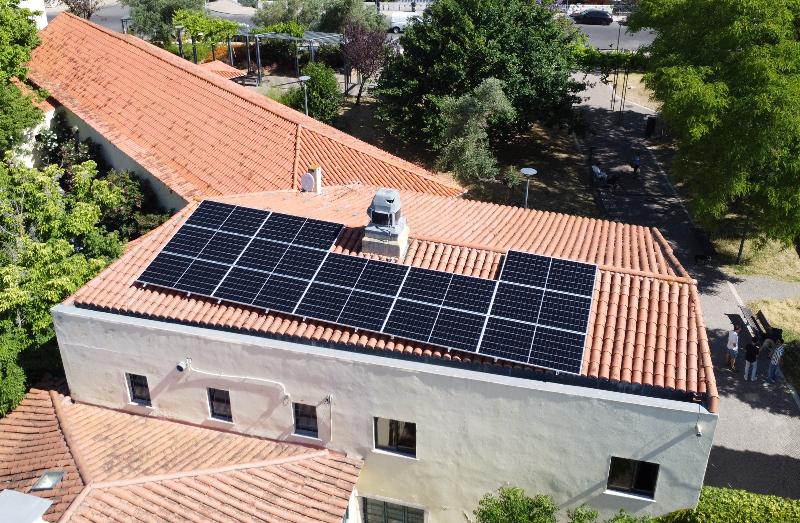
Solar Energy in Portugal: Towards a Balanced and Sustainable Transition
Portugal has committed to achieve climate neutrality by 2045, with photovoltaic solar energy being crucial for this energy transition. However, the expansion of photovoltaic plants requires the active participation of various stakeholders to minimize negative environmental and social impacts. In this context, CHANGE, in partnership with CCDRA and the Renewable Energy Chair of the University of Évora, held the “Photovoltaic Solar Forum” in 2024, with over 40 participants. This document summarizes the results in a set of recommendations for a balanced energy transition in Portugal.
See Here